

OPen-Cell Spray Foam
HOW IT WORKS
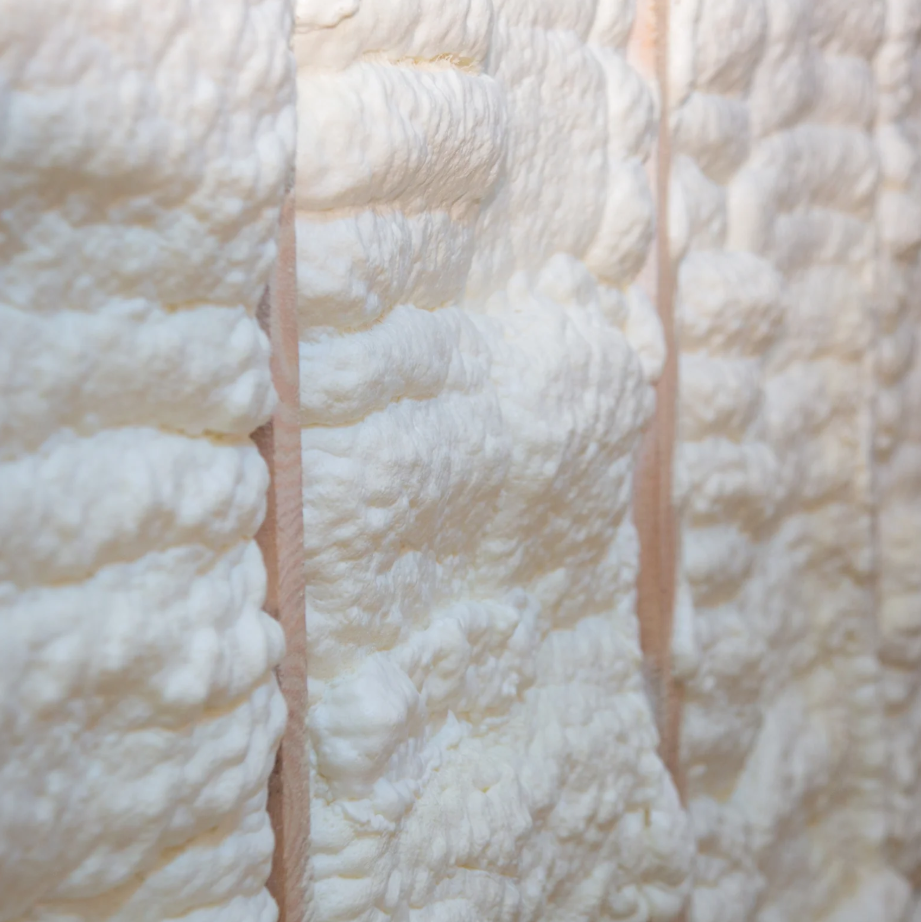
Open-cell spray foam works by trapping air within its complex web of tiny cells. Air itself is a poor conductor of heat, so by holding countless pockets of air still, the foam creates a highly effective thermal barrier. It’s the trapped air, not the plastic foam material itself, that does most of the insulating work. This is the same principle behind fiberglass batts and down jackets, but spray foam does it without any gaps or seams.
Key Characteristics:
Air Barrier & Sound: It expands into corners and cracks, reducing air leakage by up to 20% and serving as a good sound dampener.
Vapor-Permeable: It allows moisture to pass through, which helps building assemblies breathe and reduces mold risks.
Flexibility: It is soft and moves with the home, preventing detachment over time.
Easy Access: Because it is pliable, it is easier to cut away for plumbing or electrical repairs compared to closed-cell foam.
Best Uses: Ideal for wall cavities, attics, and subfloors where moisture is not a high risk and a high R-value is needed in thick layers. It provides an R-value of roughly 3.5 to 3.8 per inch